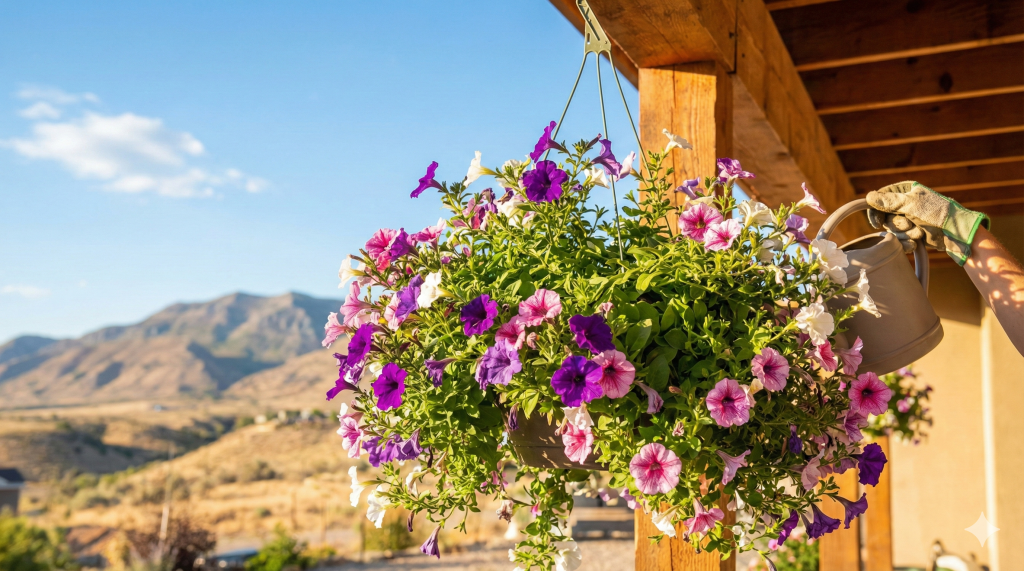
Why Flower Baskets Fail Mid-Season in Northern Utah
Most flower baskets in Northern Utah look great in May and rough by July.
Plants thin out.
Flowers fade.
Stems go woody and bare in the middle.
This isn’t neglect. It’s climate mismatch and maintenance gaps.
Hanging baskets in the Intermountain West deal with intense sun, dry air, wind exposure, and fast-draining soil. If you treat them like ground-level flower beds, they will burn out early.
What Makes Flower Baskets Different From Ground Plantings
Flower baskets are an artificial environment.
They have:
- Limited soil volume
- High evaporation rates
- No buffer against heat or wind
Because of this, small mistakes compound quickly. The margin for error is narrow, especially at elevation.
Proper flower basket maintenance is about controlling water, nutrients, and plant structure—every week, not occasionally.
Why Northern Utah Conditions Are Hard on Baskets
Dry Air and High Sun Intensity
Northern Utah’s low humidity pulls moisture directly from leaves and soil.
That causes:
- Rapid wilting even when soil looks damp
- Nutrient salts concentrating in the basket
- Flowers dropping early to conserve energy
Daily water alone doesn’t fix this. The system has to be balanced.
Cool Nights and Hot Days
Wide temperature swings stress flowering plants.
Petunias and other annuals respond by:
- Slowing flower production
- Shifting energy into survival growth
- Letting older blooms die faster
Maintenance needs to support recovery, not just appearance.
Plants That Actually Perform Well
Petunias: Still the Workhorse
Petunias remain one of the best performers for flower baskets in Northern Utah—but only if managed correctly.
They succeed because:
- They tolerate heat
- They rebound quickly when cut back
- They respond well to consistent feeding
Trailing varieties outperform upright types in baskets due to better airflow and even light exposure.
Watering: The Most Common Failure Point
How Often to Water
In peak summer:
- Once per day is typical
- Twice per day during heat waves or wind
But frequency matters less than saturation.
Each watering should fully soak the basket until water runs out the bottom. Light surface watering creates shallow roots and faster burnout.
Signs You’re Watering Wrong
- Plants wilt mid-day but don’t recover by evening
- Soil pulls away from the sides of the basket
- Flowers are small despite frequent watering
These point to inconsistent saturation, not lack of effort.
How to Fertilize Flower Baskets Without Burning Them
Flower baskets are nutrient-hungry, but overfeeding is just as damaging as underfeeding.
A Practical Fertilizing Approach
- Use a balanced, water-soluble fertilizer
- Apply at low strength but consistently
- Flush baskets with plain water every few weeks
This prevents salt buildup, which is a major cause of yellowing leaves and stalled flowering in Northern Utah baskets.
If you only fertilize once or twice per season, the plants will exhaust the soil long before fall.
Structural Maintenance: The Step Most People Skip
Cutting Back Is Not Optional
Petunias and similar plants must be cut back mid-season.
Without it:
- Stems elongate
- Centers die out
- Flowers move to the edges only
A hard trim in early to mid-summer resets growth and triggers fresh flowering within 10–14 days.
This feels aggressive, but it’s the difference between a tired basket and a full one in August.
Common Mistakes Property Owners Make
- Using cheap potting soil that collapses by mid-season
- Hanging baskets where wind strips moisture constantly
- Fertilizing heavily but infrequently
- Avoiding cutbacks because the basket “looks fine”
Each mistake accelerates decline, especially in exposed locations.
When DIY Works—and When It Doesn’t
DIY Is Fine When:
- You’re home daily to water
- You understand fertilizer timing
- You’re willing to cut baskets back hard
Professional Maintenance Makes Sense When:
- Baskets are in commercial or high-visibility areas
- Failure reflects poorly on the property
- Consistency matters more than experimentation
Regular maintenance prevents the mid-season crash that most baskets never recover from.
How Flower Baskets Fit Into Broader Property Care
Healthy flower baskets:
- Improve first impressions
- Signal consistent property maintenance
- Complement permanent landscaping
They are small, but highly visible indicators of how well a property is cared for.
Related internal topics worth exploring:
- seasonal landscape maintenance
- irrigation system checks
- commercial property upkeep
A Realistic Way to Keep Baskets Looking Good
Flower baskets in Northern Utah don’t thrive on good intentions. They thrive on routine, adjustment, and understanding how plants respond to this climate.
When maintained correctly, baskets can stay full and flowering well into fall—even in high desert conditions.
If you want flower baskets that hold up all season without constant guesswork, Tepeki provides professional maintenance rooted in real-world Northern Utah conditions.


 Tepeki
Leave a comment